A DoorDash driver typically keeps about 60 to 70 percent of gross pay after gas, vehicle wear, and taxes. On Gridwise data of about $12.43 per active hour gross, that means roughly $7.50 to $8.70 per active hour in true take-home pay — and many drivers net about $10 to $15 an hour once tips and busy periods are included.
That gap between the number on the app and the money you actually keep surprises many new drivers. DoorDash shows gross pay: base pay, tips, and any promotions. It does not subtract fuel, oil changes, tires, depreciation, or the tax bill that arrives later. Because DoorDash drivers are independent contractors, no tax is withheld from any payment. If you spend the full amount, tax season can be painful.
This guide does the math step by step, with a worked weekly example and a calculator you can use for your own numbers. All figures that are estimates are labelled as illustrative.
What gross pay really means
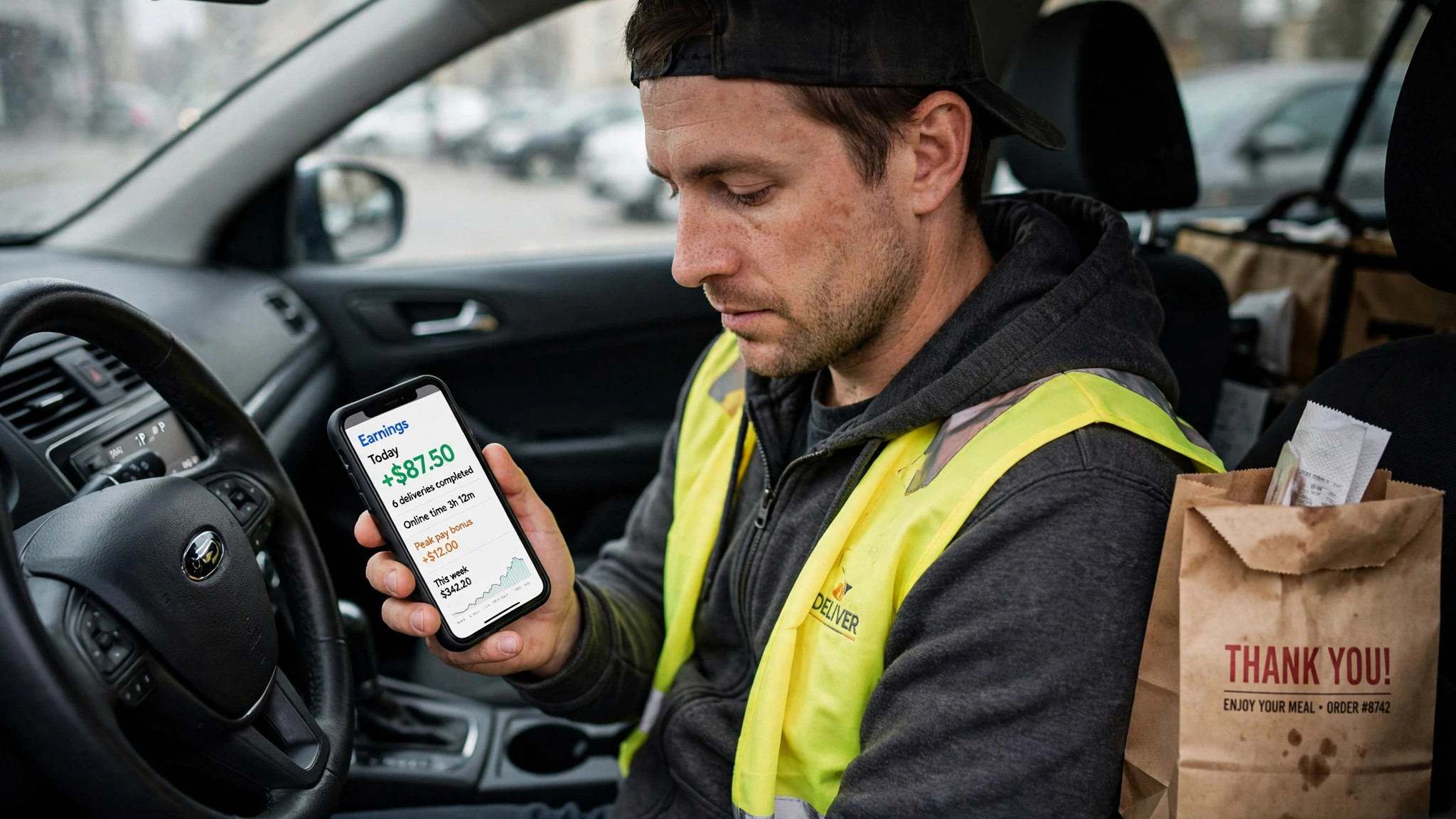
DoorDash base pay is $2 to $10 or more per offer, depending on the distance, time, and desirability of the delivery. Tips and promotions are added on top. Gridwise data puts average gross pay at about $12.43 per active hour in 2025. An active hour is time spent on a delivery, not time spent waiting with the app on.
That distinction matters. If you are online for 30 hours but active for only 20, your pay per online hour is lower than your pay per active hour. When drivers compare earnings, they often compare different things: one counts only active hours, another counts every hour the app was open. Use active hours for the pay rate, and online hours for your schedule, and keep the two separate.
Gross pay also varies a lot by city, time of day, and week. Dinner peaks, bad weather, and busy weekends usually pay more. Slow weekday afternoons usually pay less. A single good week does not prove a sustainable hourly rate, and a single slow week does not prove the job pays badly.
The costs that come out of gross pay
| Cost | Typical range | What it covers |
|---|---|---|
| Gas | $0.12–$0.18 per mile | Fuel only, at illustrative prices |
| Depreciation | $0.15–$0.25 per mile | Loss of vehicle value from mileage |
| Maintenance and repairs | $0.08–$0.12 per mile | Oil, tires, brakes, and repairs |
| Insurance endorsement | $0.03–$0.05 per mile | About $25–$50 a month for delivery cover |
| Self-employment tax | $0.07–$0.10 per mile | See tax section below |
| Total true cost | $0.45–$0.65 per mile | Illustrative range for most drivers |
Sources: cost-per-mile ranges supplied for this guide, November 2026; fuel prices and vehicle costs vary by car and city. The total is the key number: every mile you drive for DoorDash costs roughly 45 to 65 cents in real expenses, even if only fuel leaves your wallet that week. Depreciation and repairs arrive later, but they are real costs all the same.
A useful check is the monthly version of the same math. In the worked example supplied for this guide, $1,300 a month in total vehicle cost divided by 3,500 miles gives about $0.37 a mile. That is on the low side of the range above, which suggests a cheap-to-run car and low repair costs. Most drivers should plan on the higher range until their own records prove otherwise.
Worked example: a 20-active-hour week
Take an illustrative driver who is active for 20 hours in a week, earns $12.43 per active hour, and drives 600 miles. Gross pay is 20 × $12.43, or about $249. That is the number the app shows.
Fuel and wear come next. At $0.55 a mile — the middle of the $0.45 to $0.65 range — 600 miles cost $330 in true vehicle costs. That is more than the gross pay in this example, which shows why mileage matters so much: a driver who drives long distances for low-paying offers can lose money on a shift, even while the app shows earnings.
A more realistic version uses shorter trips. Suppose the same driver covers 400 miles for the same $249 gross. Vehicle costs at $0.55 a mile are $220, leaving $29 before tax. That is still very low, and it shows the central problem: at $12.43 an hour gross, there is little room for error. Tips, peak pay, and shorter distances are what make the job work.
Now try a busier, better-paid week: 25 active hours at $18 an hour gross, including tips, or $450, and 500 miles driven. Vehicle costs at $0.55 a mile are $275, leaving $175 before tax. That is $7 an hour before tax — still modest, but positive and realistic for a good week.
The lesson is not that DoorDash never pays. It is that the hourly rate depends on miles per dollar earned, not on hours alone. An offer that pays $8 for 3 miles is far better than an offer that pays $8 for 10 miles, because the second one burns more than twice as much fuel and wear for the same pay.
Taxes: what DoorDash does not take out
DoorDash drivers are independent contractors, so no income tax or Social Security tax is withheld. You are responsible for both, and you should set money aside from every payout.
Self-employment tax is 15.3% on 92.35% of net profit. Net profit is gross pay minus deductible business expenses, reported on Schedule C, with self-employment tax calculated on Schedule SE. Each $1,000 of business expense saves about $140 in self-employment tax before income tax. That is why tracking expenses matters: every documented mile and receipt lowers the tax bill.
The biggest deduction for most drivers is mileage. The IRS standard mileage rate for 2026 is $0.725 a mile from January 1 to June 30, 2026, and $0.76 a mile from July 1 to December 31, 2026. Never use $0.725 for all of 2026 — the rate changes mid-year. At 600 miles a week, the first-half rate gives a mileage value of $435 a week. Over a year, 15,000 business miles at the first-half rate are worth about $10,875 in deductions. A driver with 5,000 miles in January to June and 5,000 miles in July to December would claim $7,425.
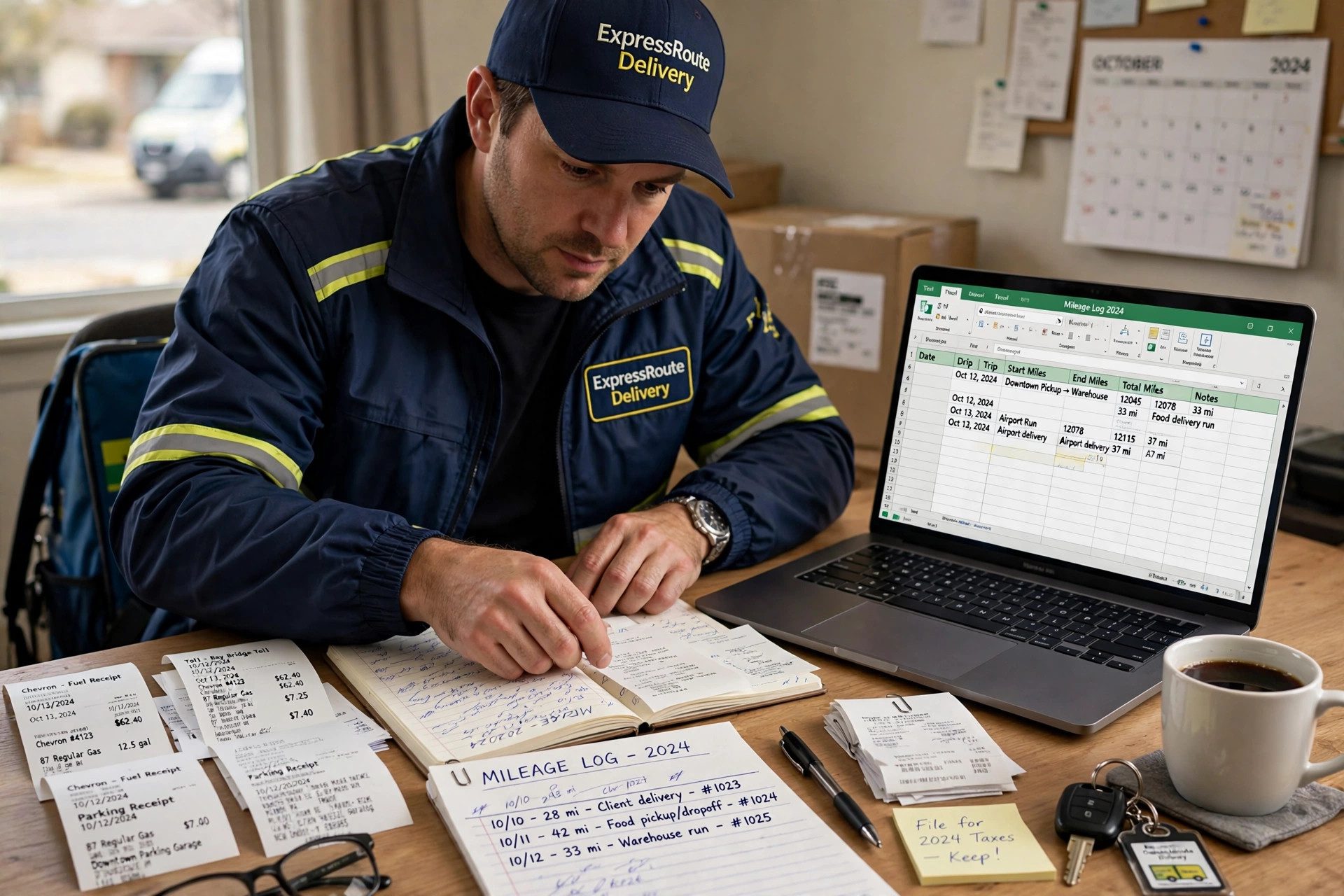
The mileage deduction replaces gas, insurance, repairs, and depreciation — do not double-count those costs as well. Parking and tolls are deductible on top. Deductible miles include driving from accepting an order to the restaurant, from the restaurant to the customer, and waiting between orders while available on the app. Personal errands and miles driven with the app off are not deductible.
There is also the qualified business income (QBI) deduction, worth up to 20% of qualified business income. For 2026, the thresholds are about $201,750 for single filers and about $403,000 for married couples filing jointly. Most drivers fall well below those thresholds, so the deduction is usually available in full, subject to the detailed rules.
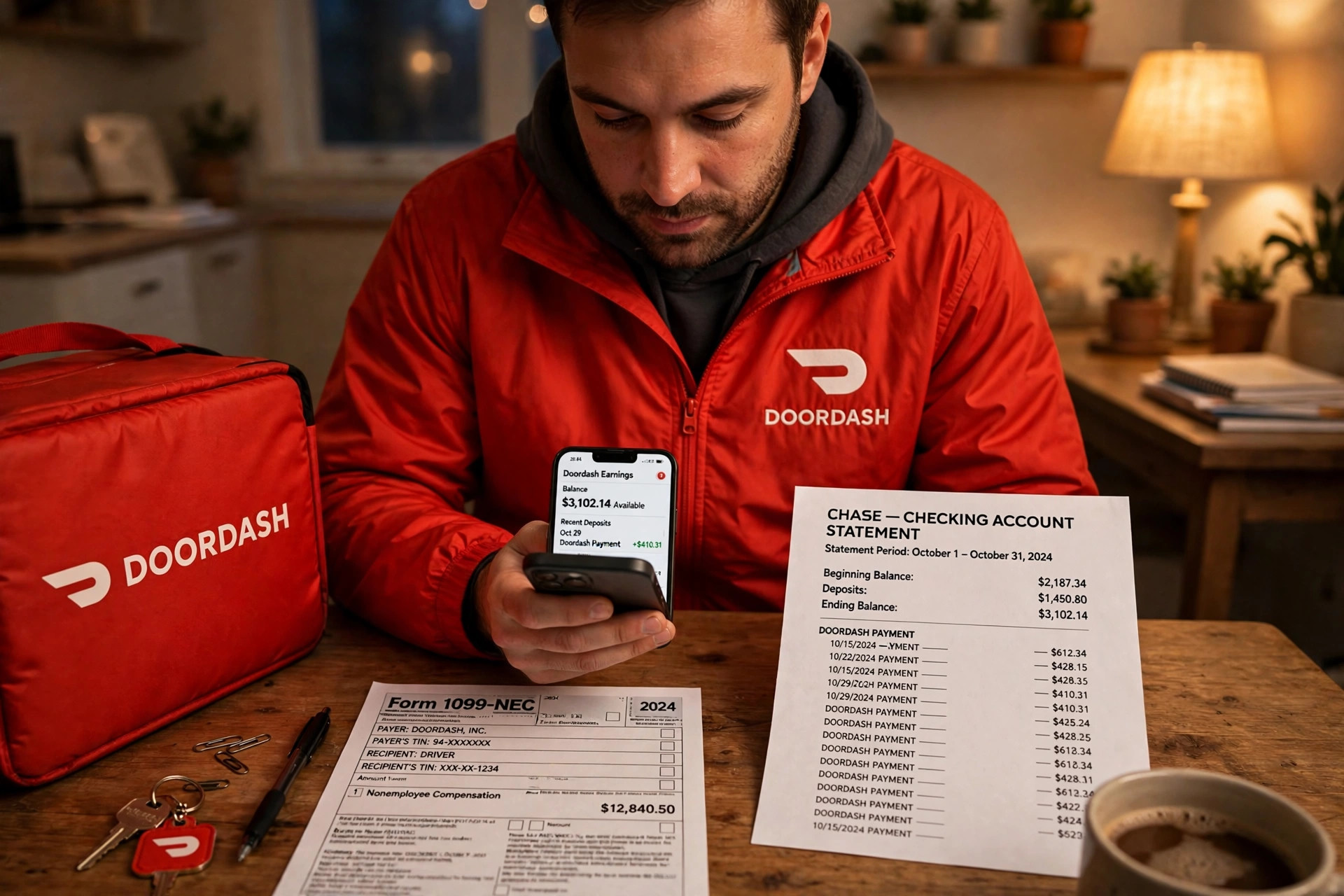
DoorDash issues a 1099-NEC if earnings meet the IRS reporting threshold. All income is taxable whether or not a form arrives, so keep your own records and do not wait for the form to know what you earned. For the full list of write-offs, see our guide to DoorDash driver tax deductions.
Use the calculator for your own numbers
Averages hide the differences that matter: your car, your city, your miles per offer, and your tax rate. The gig true pay calculator lets you enter your own gross pay, miles, fuel price, and other costs, and shows what is left after expenses and tax. Run it once with a typical week, then again with a good week and a slow week, so you see the range instead of a single number.
You can also browse the full set of finance tools on Orafyn. If fuel is your biggest cost, our best credit card for DoorDash drivers gas cash back guide compares cards that return up to 5% on gas. If you also drive for Uber, the Uber driver cost per mile calculator guide uses the same cost-per-mile method for rideshare.
Three habits raise true take-home pay more than any single trick. First, decline low-paying long-distance offers; miles are the cost, so pay per mile matters more than pay per offer. Second, track every business mile from day one, because the mileage deduction is usually the largest tax saving a driver has. Third, set aside tax money from every payout — 20 to 30 percent of net profit is a reasonable starting point for many drivers, though your own rate depends on your total income and tax situation.
FAQ
How much does a DoorDash driver really make after gas and taxes? Typically 60 to 70 percent of gross pay. On about $12.43 per active hour gross, that is roughly $7.50 to $8.70 an hour, though many drivers net $10 to $15 an hour with tips and busy periods. Your result depends on miles per dollar earned.
What is a good hourly rate for a DoorDash driver? After costs, $10 to $15 an hour is a realistic target for many drivers. If your true hourly rate after fuel, wear, and tax is below $10, check your miles per offer — long trips for low pay are usually the cause.
How do I calculate my true DoorDash pay? Take gross pay, subtract vehicle costs at $0.45 to $0.65 a mile, then subtract tax on the remaining profit. Or use the gig true pay calculator and enter your own weekly numbers.
Does DoorDash take out taxes? No. DoorDash drivers are independent contractors and no tax is withheld. You must pay income tax and self-employment tax yourself, usually through quarterly estimated payments. Set money aside from every payout.
How much should a DoorDash driver save for taxes? Many drivers set aside 20 to 30 percent of net profit, but the right amount depends on your total income, deductions, and tax bracket. A tax professional can give you a figure for your situation.
Is DoorDash worth it after gas and taxes? It depends on your market, your car, and how selective you are with offers. Drivers who accept only well-paid, short-distance offers and track every mile usually do far better than drivers who accept everything.
Disclaimer: This article is general information only and is not financial advice or tax advice. Tax rates, thresholds, and IRS rules change, and individual situations differ. Keep your own records and consult a qualified tax professional before making tax decisions.
Last verified: November 2026